
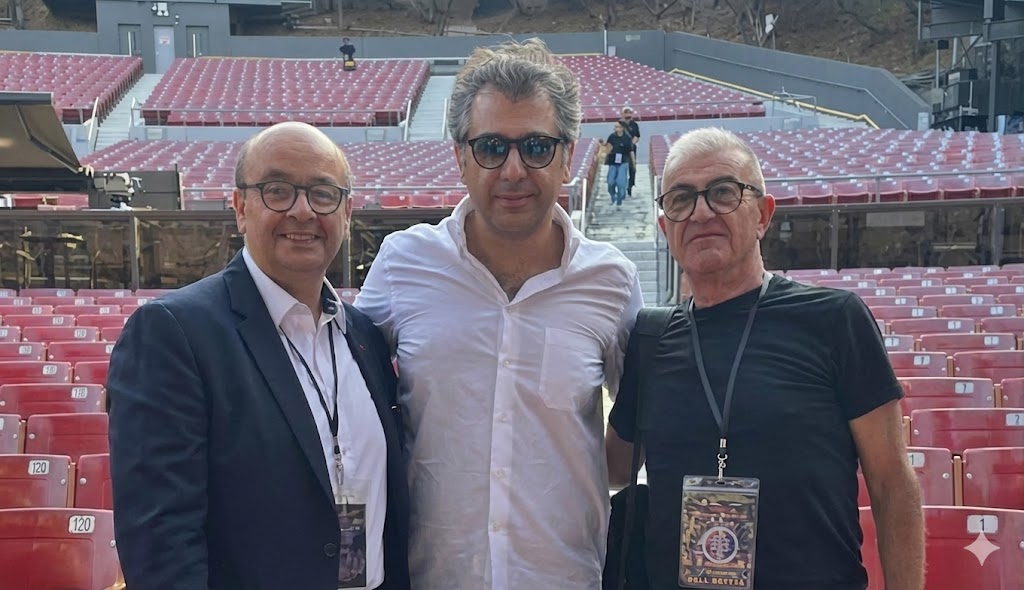
LOS ANGELES, October 9, 2025 — The Armenian community in Los Angeles is vibrant and visible, but beneath the surface, a silent battle is being waged to protect authentic culture from being washed away by commercialism.
Saro Mangasaryan, a music producer and founder of the International Music School in the U.S., discussed these critical challenges in a recent interview with the “Voice of the Diaspora” program. For over three decades, Mangasaryan has been at the forefront of this cultural struggle, not only organizing concerts but working to instill a sense of artistic taste that he believes is currently at risk.
Success: Talent vs. Connections Mangasaryan challenged the myth that talent alone guarantees success in the competitive LA arts scene. He pointed to an unwritten rule of the system: it is often who you know that matters most.
“Who do you know, and who knows you? That is essentially the most important factor,” Mangasaryan admitted. He noted that even entry into prestigious institutions like the Los Angeles Philharmonic often requires the “right” connections, creating an invisible wall for talented but unconnected artists.
The “Smartphone Generation” A major concern for the producer is the shifting attitude of the younger generation. Mangasaryan described a decline in dedication, noting that while students years ago would use free time for homework or practice, today’s youth are often consumed by their devices.
“Now everyone is in their phones… You don’t understand what they are watching or why. It naturally hinders them,” he said. He observed that many children avoid difficult instruments like the piano simply because they don’t want to practice, a trend he attributes to a general avoidance of effort and relaxed parental control.
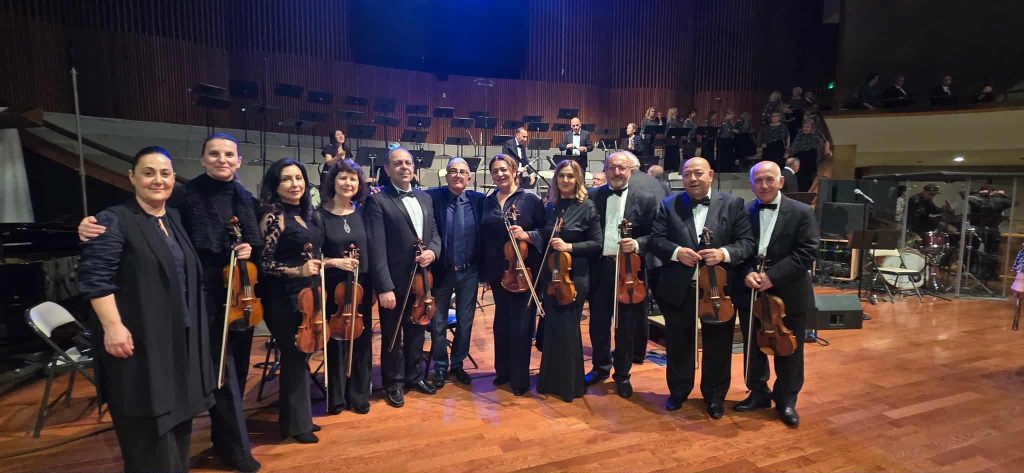
Quality as the Key to Survival In a landscape dominated by easily consumable, commercial “art,” Mangasaryan believes the solution lies in maintaining high standards. His school remains the only one in the Los Angeles area offering students the opportunity to perform with a chamber orchestra, giving them a taste of the true stage.
He cited successful major projects—such as the concert at the Greek Theatre featuring Sergey Smbatyan, Tigran Hamasyan, and Serj Tankian under the baton of Mikael Avetisyan—as proof that there is still a strong demand for high-quality culture.
A Call for Cooperation Ultimately, Mangasaryan diagnosed the community’s struggle as one of internal division. Despite having the finances, talent, and history to be a unified force, the community often fights against itself.
“We need cooperation,” Mangasaryan concluded. It is a simple but painful truth for a diaspora community striving to preserve its identity and values under the California sun.